







Service 06 · Private security
Close protection
Discretion, responsiveness and control.
Tailored protection by A3P officers (the French close protection qualification): threat assessment, personal protection and intervention in the event of danger, in the strictest confidence. In accordance with Article L. 612-2 of the French Internal Security Code, this service is provided by a dedicated subsidiary of Prestige Sécurité.
What we cover
Close protection: our scope of service
-
Threat assessment
Assessing the risk and designing a proportionate, discreet protection plan.
-
Personalised protection
Protection adapted to your travel and your pace of life.
-
Intervention in case of danger
A3P officers trained in crisis management and secure extraction.
-
Liaison with law enforcement
Established contact with the authorities when the situation requires it.
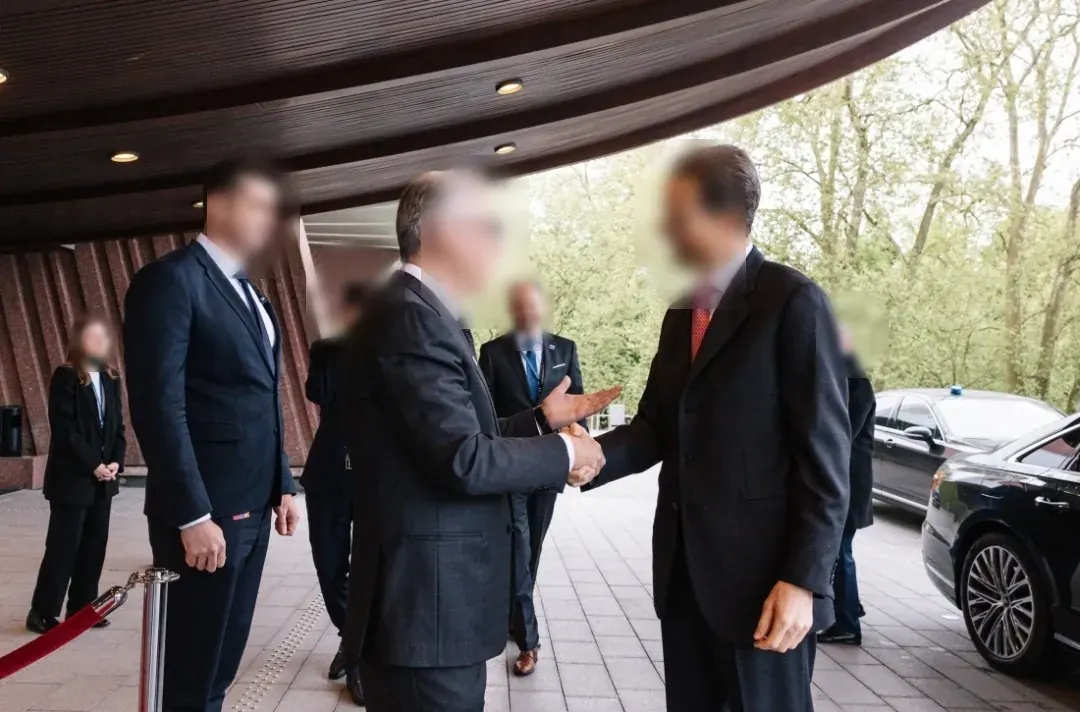
Close protection means ensuring the physical safety of a person exposed to an identified risk, during their travel, their meetings or an event. It is carried out by A3P officers (agents de protection physique des personnes, the French close protection qualification), who are qualified and hold a professional card covering this activity. Prestige Sécurité offers it, through a dedicated subsidiary, to executives, public figures, distinguished guests and private individuals, from Strasbourg and in the strictest confidence: every request begins with a direct conversation, never with a form.
Who is close protection for?
Close protection is warranted when a specific risk targets a specific person. The most common situations:
- an executive exposed by a sensitive announcement, a dispute, a general meeting or a trip;
- a public figure, whose fame attracts attention, well-meaning or otherwise;
- a distinguished guest or a delegation, for the duration of a stay or an event;
- a person who is the subject of threats, in a professional or private context;
- a family facing a temporary situation of exposure.
The protection of senior state figures, for its part, is the responsibility of specialist police units. Our article Close protection: when should you use it? (in French) helps you judge whether your situation warrants it.
It all starts with the threat assessment
Before talking about staffing, the situation has to be understood: who might seek to cause harm, for what reason, by what means, in what context. The threat assessment also examines the person’s exposure: their diary, their visibility, where they live and work, the people around them.
It results in proportionate protection, neither too light in the face of a real risk nor so heavy that it attracts attention or disrupts the protected person’s life. It is not set in stone: a change of context, a new threat or an unusual trip justify revisiting it. To find out more: Threat assessment: the first step towards successful protection (in French).
What the protection includes
The methods are not described publicly: their effectiveness depends partly on their discretion. Broadly speaking, the protection includes:
- protection adapted to your pace of life, your travel and your professional or family constraints;
- advance preparation of places and journeys, carried out quietly;
- coordination with those around you: assistant, family and friends, organisers of the events you attend;
- a controlled response in case of danger, whose priority is to get you to safety;
- liaison with law enforcement when the situation requires it, without ever taking their place.
At a public event, this protection can work alongside an event security plan, so that the protection of the individual and that of the public remain coordinated.
Discretion and confidentiality: the commitments
Effective protection goes unnoticed. Ostentatious protection signals that the person has something to fear, hampers their interactions and can harm their image. The officers adopt dress suited to the context, the right distance and a neutral attitude.
Confidentiality is just as essential. Private security officers are bound by a code of ethics that governs respect for privacy and the non-disclosure of information learned during an assignment. Concrete commitments are added:
- only the people who need it know the details of the assignment;
- the people protected are never named and no images are published;
- a confidentiality clause can be included in the contract, including after the assignment ends.
These requirements are discussed in Discretion and confidentiality: the heart of the A3P profession (in French).
The legal framework in France
The physical protection of individuals is a private security activity regulated by Book VI of the French Internal Security Code (code de la sécurité intérieure). It requires:
- a company authorised by the CNAPS (the French private security regulator) for this activity;
- officers holding a professional card covering the physical protection of individuals, after specific training.
French law also makes the physical protection of individuals exclusive of any other activity (Article L. 612-2 of the French Internal Security Code). To comply with this rule, the activity is entrusted to a subsidiary of Prestige Sécurité dedicated exclusively to it.
The A3P officer has no police powers: they do not check identities, do not search and act under ordinary law. They are not armed by default, carrying a weapon remaining a strictly regulated exception. They do not investigate: seeking information about third parties is a matter for another regulated profession. The profession is described in detail in What is an A3P officer? (in French).
What determines the cost of an assignment
The cost of close protection depends on the arrangements chosen after the threat assessment:
- the number of officers, set by the level of risk and the complexity of the schedule;
- the duration of the assignment, from a few hours to several weeks;
- the daily hours covered, and the share of nights, Sundays or public holidays;
- travel and the logistics it involves;
- the A3P qualification of the officers, more demanding than that of a surveillance officer.
No serious quote can be drawn up without a prior conversation about your situation.
Direct, confidential first contact
Close protection is provided by a dedicated subsidiary of Prestige Sécurité, a security company based in Strasbourg since 2016. No assignment is subcontracted: the officers who accompany you belong to this subsidiary, which limits the number of people aware of your situation. Our on-call service can be reached 24/7.
For this service, we do not use a public form. Call us on 03 88 31 59 50 or write to us via our contact page, keeping to the essentials: we will offer you a confidential conversation with an identified contact.
In this first conversation, we ask only for what we need to understand the situation: the nature of the requirement (travel, an event, a period of exposure), the dates envisaged and the degree of urgency. Sensitive details (the precise schedule, addresses, the context of the threat) are discussed afterwards in a meeting, with only the people who will need them to prepare the assignment.
Frequently asked questions
Is a close protection officer armed?
No, not by default: in France, a private close protection officer works unarmed in the course of an ordinary assignment. Carrying a weapon in private security remains an exception, subject to specific conditions, training and authorisations, which concern only situations of particular risk. This often comes as a surprise, so widespread is the image of the armed bodyguard. Yet it reflects the logic of the profession: an A3P officer’s effectiveness rests on anticipation, observation and the ability to move the protected person away from a deteriorating situation, not on confrontation. Nor do they have any police powers: they do not check identities, do not search and act under ordinary law, self-defence included. If you feel your situation warrants more, let us discuss it directly: the threat assessment will show what is proportionate and legally possible.
What is the difference between a bodyguard and an A3P officer?
None in the substance of the job, but only the A3P qualification is regulated and verifiable. “Bodyguard” is the everyday term; A3P, for agent de protection physique des personnes (officer for the physical protection of individuals), refers to the activity that the French Internal Security Code (code de la sécurité intérieure) regulates under that name. A professional operating within the rules must have completed specific close protection training, hold a professional card issued by the CNAPS, the French private security regulator, for this activity and work within a company authorised by the CNAPS. A surveillance officer, however experienced, cannot carry out a close protection assignment without this qualification. Someone who presents themselves as a bodyguard without these guarantees is operating outside the legal framework, and exposes both the protected person and whoever engages them. Before entrusting your safety to anyone, ask for the number of the company’s authorisation to operate and confirmation that each officer holds a professional card covering the physical protection of individuals.
How many officers does it take to protect one person?
There is no standard number: staffing follows from the threat assessment, the person’s schedule and the places they go. An assignment may be carried out by a single officer for low-exposure travel, or require a team when the level of risk, the duration or the complexity of the schedule demands it. More officers does not automatically mean more security. Oversized protection draws attention to the protected person, signals that they have something to fear and weighs on their personal and professional life. Conversely, protection that is too light in the face of a real threat leaves gaps. The right level is the one that responds to the identified risk, proportionately and discreetly. That is why close protection is never priced without a prior conversation: staffing is decided once the situation is understood, and it can change if the context changes.
How do you keep my request confidential?
By handling every request through direct contact, without a public form, and by limiting information to what is strictly necessary from the very first conversation. A request for protection already contains sensitive data: the person’s identity, the nature of the threat, an upcoming trip. We therefore prefer a conversation by phone or in a meeting with an identified contact. From then on, only the people who need to know a piece of information for their assignment have access to it. The officers are bound by the private security code of ethics, incorporated into the French Internal Security Code, and the contract may include an explicit confidentiality clause, including after the assignment ends. The people protected are never named, no images are published and no assignment is ever used as a sales argument. Personal data is limited to what the assignment requires.
Can close protection be requested for a single day or a single event?
Yes: close protection can cover a day of meetings, a trip, an evening or a specific event, just as well as a longer period. A short assignment still requires preparation. Even for a few hours, it is essential to understand the context, know the schedule, the places, the times and the people to be informed, and make sure the protection remains discreet. That is why the earlier the better: as soon as the date and the schedule are known, contact us so that preparation can be done properly. For an unforeseen need, call our on-call service directly, available 24/7: we will tell you frankly what can be organised in the time available. A one-off assignment can also serve as a first contact, before more regular protection if your situation warrants it.
Confidentiality
A discreet first contact
Close protection demands the strictest confidentiality. We do not use a public online form for this service: contact us directly and your request remains private.
Our other services
A complete security force
Verified Google reviews
What our clients say
Assignments delivered, and clients who say so: the reviews published on our Google listing.
-
★★★★★
Retour juste après le tournoi de l’équipe de france de handball au Rhenus de Strasbourg. Top top top! Les agents étaient courtois souriant et sympathique en plus d’être professionnels et rassurants.
ClaireGoogle review
-
★★★★★
Entreprise professionnel et conviviale, qui maitrise parfaitement son domaine.
Tom D.Google review
-
★★★★★
Je conseil très fortement, équipe très réactive, service commercial très agréable. La mise à disposition des agents et confirmer rapidement et leur profil est toujours adapté. J’en ai eu besoin pour un événement scolaire et leur réponse a été plus que qualitative. Pour un besoin en sécurité, je n’irai sans aucun doute nulle part ailleurs.
Rabia S.Google review
-
★★★★★
Prestation parfaite de A à Z!!!
Gregory M.Google review
-
★★★★★
Sérieux, calme, pro. Entreprise de sécurité irréprochable. Je recommande fortement
Hamid E.Google review
-
★★★★★
Entreprise très sérieux, Je recommande et très professionnel Agent de sécurité très agréable et professionnel
Samir F.Google review
-
★★★★★
Meilleur boîte de sécurité bravo
NassimGoogle review
-
★★★★★
Merci pour votre professionnalisme au stade cette après midi et surtout à l’agent qui m’a accompagné pour sa bienveillance étant en situation de handicape
Hassna B.Google review
-
★★★★★
Meilleure entreprise de sécurité de la France toujours de bon travail
Khalifa A.Google review
-
★★★★★
Les agents de sécurité présents au stade cet après midi ont été d’un grand professionnalisme. Ils ont su assurer la sécurité dans la tribune tout en faisant preuve de bienveillance envers les spectateurs (enfants perdus, personnes à mobilité réduite, personnes âgées...). Vraiment très appréciable merci !
Anna S.Google review
-
★★★★★
Accueil très sympa et professionnel
Patrick C.Google review
-
★★★★★
Excellent service et à l’écoute! Merci à vous encore
Sam J.Google review
-
★★★★★
Entreprise, disponible et compétente
RourouletteGoogle review
-
★★★★★
Prestige Sécurité est une société très professionnelle autant par son encadrement que par l’ensemble de ses agents.
niicckoGoogle review
-
★★★★★
Un nouveau visage de la sécurité est enfin représenter à Strasbourg . Tester c’est l’adopter ! Je conseille Prestige Sécurité aux futures agents de sécurité et aux prestataires .
Hicham F.Google review
Our territory
Strasbourg, the Bas-Rhin & the whole Grand Est
From Strasbourg to Reims, from Metz to Mulhouse: the whole Grand Est. On the German side (Kehl, Offenburg), assignments are assessed case by case.
A permanent on-call service, controlled response times.
2 rue de Gribeauval · 67100 Strasbourg
- Strasbourg
- Illkirch-Graffenstaden
- Vendenheim
- Wolfisheim
- Oberhausbergen
- Molsheim
- Brumath
- Thionville
- Troyes
- Offenbourg
- Schiltigheim
- Ostwald
- Mundolsheim
- La Wantzenau
- Haguenau
- Obernai
- Colmar
- Nancy
- Châlons-en-Champagne
- Bischheim
- Lingolsheim
- Souffelweyersheim
- Geispolsheim
- Sélestat
- Erstein
- Mulhouse
- Épinal
- Kehl
- Hœnheim
- Lampertheim
- Eckbolsheim
- Fegersheim
- Saverne
- Bischwiller
- Metz
- Reims
- Ortenau